
Application Guides
Epoxy Fiberglass Tubes in Surge Arrester Applications: Design Considerations and Benefits
Application guide for surge arrester insulation tube requirements, including insulation role, structural support, dimensions, machining, and RFQ preparation.
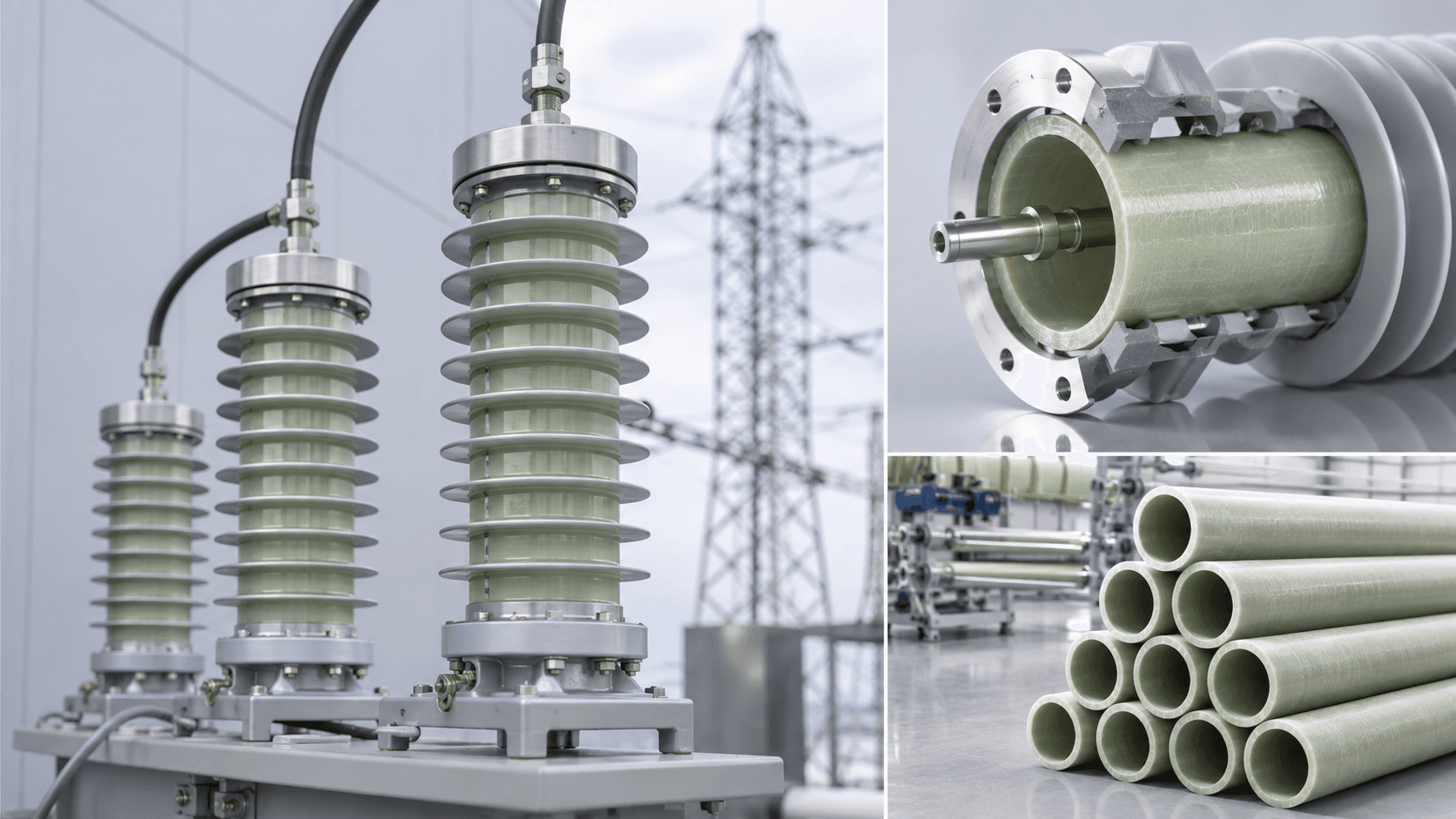
Surge arrester equipment often requires insulation components that support electrical performance, mechanical stability, and assembly fit. An epoxy fiberglass tube may be used as an insulation and structural component within the equipment design, depending on the approved drawing and application requirements. WEENOOR provides customized epoxy fiberglass filament wound tubes for electrical insulation applications, including requirements related to surge arrester equipment. This article explains practical design considerations for buyers, engineers, and distributors preparing a surge arrester insulation tube inquiry. Application images for this topic should be treated as representative application visuals, not customer projects. Final product requirements depend on the customer's drawing, specification, equipment structure, and review process. ## Why Surge Arrester Tube Requirements Need Application Review A surge arrester insulation tube is not selected only by diameter and length. It must be reviewed in relation to the equipment structure. The tube may need to support insulation, maintain spacing, protect internal components, provide a structural sleeve, or serve as part of an assembly interface. During technical review, customers usually provide the equipment type, drawing, tube dimensions, and any special machining requirements. If the tube is part of a new design, the engineering team may also explain the intended function. If the tube is for replacement or distributor sourcing, the existing drawing or sample specification becomes especially important. For broader application context, see Applications. ## Electrical Insulation Role In surge arrester applications, insulation requirements should be defined through the equipment design and agreed test method. The tube may be expected to support insulation separation or structural insulation inside a high-voltage assembly. However, the exact requirement should not be guessed from the application name alone. Useful insulation information includes: - Equipment voltage context if available - Function of the tube in the insulation system - Any required test method or acceptance criteria - Whether the tube is used inside or around another component - Any environmental exposure known to the customer Typical values depend on material system, tube size, wall thickness, design, and testing method. If a customer has a specific requirement, it should be attached as part of the inquiry. ## Mechanical Support and Assembly Fit Surge arrester insulation components may also have mechanical responsibilities. A tube can help maintain geometry, support assembly positioning, or protect internal elements. Mechanical requirements should be reviewed with the drawing because tube size, wall thickness, length, holes, slots, and end processing can all affect the final component. Important mechanical and assembly details include: - Inner diameter and outer diameter - Wall thickness - Overall length - End condition - Support or clamping method if known - Interface dimensions - Machining features If the tube includes holes, slots, or other features, provide a drawing that clearly shows their positions and tolerances. Even small machining details can matter when the part must fit into an electrical equipment assembly. ## Material and Manufacturing Considerations Epoxy fiberglass filament wound tubes use glass fiber reinforcement and epoxy resin. Filament winding is used to form a reinforced tube structure. The final product should be reviewed according to tube dimensions, material system, curing process, machining needs, and inspection requirements. For a surge arrester application, buyers should avoid requesting only a generic fiberglass tube if the equipment requires an epoxy fiberglass filament wound insulation component. Clear product naming helps the supplier understand the expected construction and application. Manufacturing discussion may include: - Tube winding and curing - Cutting to required length - Machining according to drawing - Inspection before release - Packaging for shipment protection For manufacturing background, review Manufacturing. ## Dimensional Control Dimensional control is central to surge arrester tube selection because the tube must fit the assembly. A useful drawing should define ID, OD, length, wall thickness, tolerance, and any machined features. During inspection and shipment preparation, the supplier may check key dimensions against the agreed drawing. Buyers should identify which dimensions are critical for assembly. If all dimensions are marked with very tight tolerances without engineering need, quotation and production review can become slower. If critical dimensions are not marked, the supplier may need additional clarification. The best approach is to separate: - Critical dimensions for assembly - General dimensions for reference - Pending dimensions still under design review ## Mid-Article CTA Need a surge arrester insulation tube reviewed? Send your drawing, equipment context, critical dimensions, machining requirements, and expected quantity for technical review. ## Machining Requirements for Surge Arrester Tubes Some surge arrester insulation tubes may require simple cut-to-length processing. Others may need drilled holes, slots, end machining, chamfering, or special interface features. The required machining scope should be part of the RFQ. When sending a machining drawing, include: - Hole diameter - Hole position - Slot shape - Slot depth and width - End processing - Tolerance for machined features - Surface or edge expectations Machining should be reviewed before quotation because it affects production time, inspection, and sometimes packaging. If the drawing is not final, mark it as preliminary. ## Benefits of a Clear Surge Arrester Tube RFQ A clear RFQ helps both engineering and procurement. Engineering can confirm whether the drawing and application requirements are understood. Procurement can receive a quotation based on real dimensions and scope rather than assumptions. Benefits of a clear RFQ include: - Faster technical review - Fewer clarification emails - Better understanding of machining scope - More practical quotation discussion - Better preparation for inspection and shipment For quotation preparation, review Contact. ## What to Include Before Asking for Price For a surge arrester insulation tube, a price request should be connected to the product scope. If the RFQ only says surge arrester tube, the supplier still needs to know the actual part dimensions, drawing status, machining features, quantity, and inspection expectations. A clear technical package helps prevent the quotation from being based on assumptions. Before asking for price, prepare: - Drawing or dimensioned sketch - ID, OD, wall thickness, and length - Application equipment type - Tube function in the assembly - Machining features - Critical tolerance - Quantity and expected order stage - Destination country or region If the inquiry is from a distributor, clarify whether the request is for an existing customer drawing, a new project, or a replacement part. This context helps the supplier understand how much engineering review is needed before quotation. ## How Surge Arrester Tube Inquiries Move Toward Production The path from inquiry to production usually starts with a drawing and application review. The supplier checks whether the requirement belongs within the epoxy fiberglass filament wound tube scope and whether the dimensions and machining features are clear enough for quotation. If details are missing, the customer may need to confirm tolerance, end processing, quantity, or inspection expectations. After quotation discussion, the next stage depends on the buyer's purchasing process. Some customers request samples or trial quantities. Others request batch quotation for a known drawing. Before production, the approved drawing and order requirements should be aligned so that machining and inspection are based on confirmed information. During inspection and shipment preparation, attention should stay on agreed requirements. This may include dimensional checks, visual review, packaging protection, and shipment documentation if requested. The important point is that the process should follow the approved drawing, not a general assumption about all surge arrester tubes. ## Internal Links for Buyers Use these pages to move from application research to inquiry: - Product overview: Products - Application overview: Applications - Manufacturing process: Manufacturing - Inquiry form: Contact ## Practical Communication Between Engineering and Purchasing Surge arrester insulation tube inquiries often involve both engineering and purchasing teams. Engineering may focus on the drawing, application position, critical dimensions, and inspection method. Purchasing may focus on quotation, order quantity, delivery expectation, and supplier communication. A good inquiry should connect both sides. For example, engineering can provide the drawing and mark critical dimensions, while purchasing can provide quantity, destination, and required response timing. If the request is for supplier comparison, say so clearly. If the request is for an urgent replacement or a planned production order, that context also helps the supplier respond in the right way. This practical coordination supports a better quotation. It also reduces the risk that sales receives a request that looks complete commercially but is missing the technical information needed for real review. ## FAQ ## What is a surge arrester insulation tube? It is an insulation component used in surge arrester equipment according to the equipment design. The exact function and requirements depend on the approved drawing and application structure. ## What information is needed for a surge arrester tube inquiry? Useful information includes drawing, ID, OD, wall thickness, length, equipment context, machining features, tolerance, quantity, and inspection requirements. ## Are representative application images customer projects? No. Representative application visuals should be treated as application illustrations, not customer project references. ## Can WEENOOR support custom machining? WEENOOR can review machining requirements such as cutting, drilling, slotting, end processing, and special features according to customer drawings. ## Conclusion Epoxy fiberglass tubes for surge arrester applications should be reviewed around insulation role, mechanical support, dimensional fit, machining requirements, inspection expectations, and equipment context. A complete drawing and clear application description help the supplier understand the requirement and prepare a more useful quotation. WEENOOR supports customized epoxy fiberglass filament wound tubes for electrical insulation applications. For surge arrester tube inquiries, send the drawing, application context, dimensions, machining details, and quantity for review. ## CTA Request a Quote: Contact WEENOOR Send Your Drawing: Upload through the inquiry form